Strengthening collaboration with stakeholders
Strengthening collaboration with stakeholders remained a central pillar of the EDQM’s work in 2025, reflecting the understanding that public health challenges are global and require sustained co‑operation, trust and shared expertise. Throughout the period, the EDQM continued to work closely with a wide range of partners, including governments, regulatory authorities, laboratories, international organisations and public health stakeholders, to reinforce regulatory systems and promote access to quality medicines and healthcare products worldwide.
International outreach featured prominently, notably through intensified engagement with African partners. Study visits involving African regulatory bodies and international organisations highlighted the EDQM’s commitment to capacity‑building, knowledge exchange and regulatory harmonisation. By sharing its experience in network co-ordination and standard‑setting, the EDQM positioned itself as a trusted partner supporting the development of resilient medicines regulatory systems and contributing to global public health protection.
Collaboration within established laboratory networks remained a key driver of impact. The 30th Annual Meeting of the General European Official Medicines Control Laboratories Network (GEON) brought together a diverse community of laboratories and stakeholders to address shared challenges, including sustainability, specialised testing capacities and evolving governance needs. Discussions demonstrated the value of co-ordinated approaches to post‑market surveillance, scientific exchange and strategic planning, while reinforcing links with international partners such as the World Health Organization (WHO). The network’s expansion, including the accession of Egypt as an associated member, further strengthened international co‑operation and extended collaboration beyond Europe.
Similarly, the European Network of Official Cosmetics Control Laboratories (OCCLs) continued to foster collaboration among national authorities. Its 16th meeting illustrated how joint testing, data sharing and co-ordinated market surveillance can enhance the monitoring of cosmetic products and support consumer safety across Europe. Practical examples, including collaborative test studies and laboratory exchanges, underscored the benefits of close technical co‑operation.
At the institutional level, collaboration was further reinforced through a landmark agreement between the Council of Europe/EDQM and the European Union (EU) to strengthen substances of human origin (SoHO) systems. Building on decades of partnership, the agreement supports countries in implementing standards, ensuring safe and sustainable supplies of blood, tissues, cells and organs, and promoting harmonisation throughout Europe and beyond.
Together, these activities underline the EDQM’s commitment to strengthening collaboration with stakeholders as a foundation for effective regulation, innovation and public health protection.
EDQM to play key role in strengthening African medicines regulation
The EDQM has positioned itself as a trusted partner for global and regional regulatory convergence and reliance, building on its extensive expertise in co-ordinating laboratory networks.
The EDQM joined a major EU initiative aimed at strengthening regulatory systems for medicines across Sub-Saharan Africa, under a grant agreement signed with the European Medicines Agency (EMA). Building on its extensive expertise in co-ordinating laboratory networks – particularly through the GEON – the EDQM will support the AMQF and its Networks of African Reliance Laboratories, as well as individual AMQF National Quality Control Laboratories. The EDQM will use its experience to help strengthen laboratory capacity and competence and support the establishment and maintenance of state-of-the-art quality systems and robust procedures.
Part of the European Commission’s “Team Europe Initiatives”, the project supports a continental regulatory model that is based on reliance – a transformative approach that promotes regulatory co-operation and efficiency. The decision of the EMA to entrust the EDQM with key components of this project underscores the EDQM’s proven track record in managing international laboratory networks and its role as a trusted global partner.
Find out more in the press release
“EDQM to play key role in strengthening African medicines regulation”.
Find out more in the press release
“EDQM to play key role in strengthening African medicines regulation”.
International collaboration for public health protection – EDQM welcomes African partners
African regulators visited the EDQM in Strasbourg, with a focus on capacity-building initiatives and fostering global partnerships through knowledge exchange.
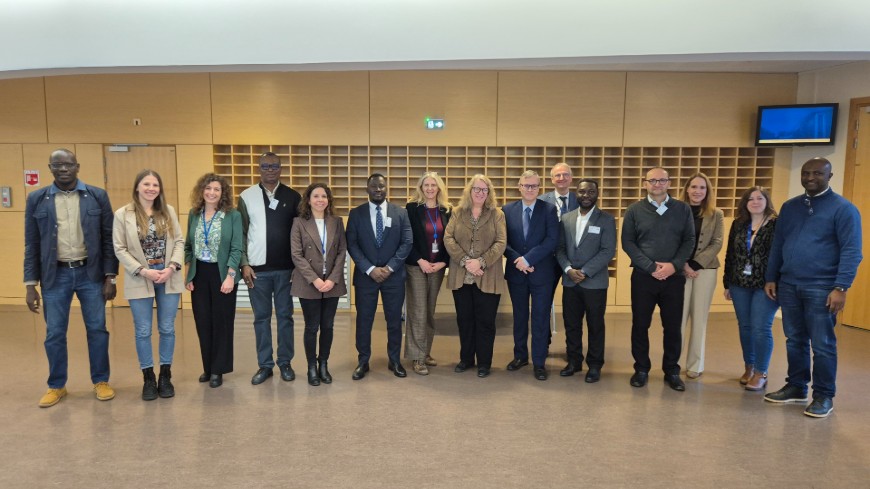
Representatives from the African Medicines Regulatory Harmonisation Secretariat, the African Medicines Quality Forum (AMQF) and the Gates Foundation convened in Strasbourg for a study visit to the EDQM in February 2025. This event marked an important milestone in the EDQM’s ongoing commitment to strengthening regulatory systems for medicines worldwide.
During the visit, the EDQM reaffirmed its strong support for the establishment and development of the African Medicines Agency (AMA), which has since launched. It also reiterated its commitment to working with National Quality Control Laboratories to enhance their capacity and competencies. Independent control laboratories play a crucial role in protecting public health by ensuring the quality and safety of medicines across the continent.
Because public health challenges are global, they require international co-operation and harmonisation. By sharing its extensive hands-on experience in co-ordinating the GEON and developing globally harmonised standards, the EDQM aims to contribute to better access to quality medicines worldwide. Overall, the visit underscored the EDQM’s commitment to fostering global partnerships, promoting knowledge exchange and enhancing its impact on public health through collaboration.
30th GEON Annual Meeting – Highlights
The 30th GEON Annual Meeting strengthened collaboration among official medicines control laboratories (OMCLs) and stakeholders, addressing sustainability, specialised testing capacities, governance updates and closer international co-operation.
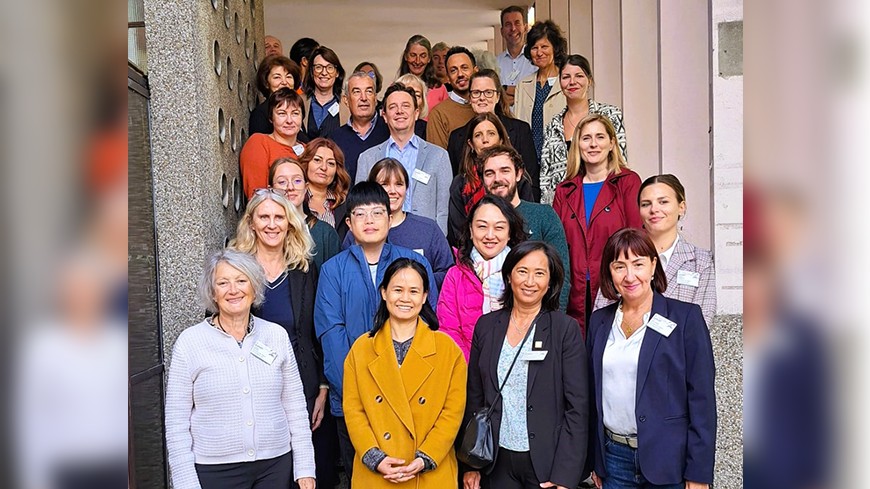
The 30th Annual Meeting of the GEON took place in Oslo (Norway) from 19 to 23 May 2025, bringing together over 250 participants from 61 OMCLs from 41 countries. The event was hosted by the Norwegian Medical Products Agency (NOMA) and co-organised with the EDQM.
Discussions included collaboration and work co-ordination between OMCLs and key stakeholders, the development of specialised centres to help address testing needs across the network, and the 2024 closure, due to budgetary constraints, of the network’s last remaining laboratory with specialised capability in radiopharmaceuticals.
Environmental sustainability, now one of the GEON’s strategic goals, was another key topic, with discussions focused on its practical implementation within OMCLs. Participants also considered new amendment proposals to the Mutual Joint Audit policy and discussed closer collaboration with WHO.
Lastly, the GEON Advisory Group renewed its membership, with four of eight members replaced by election, and Katerina Brezovska (North Macedonian OMCL) elected as Chair.
Additional event highlights included:
- OMCL testing of anti-tampering devices (ATDs);
- examples of integrating quality assessors’ pre-authorisation risk signals into national post-market surveillance testing campaigns and plans;
- animal well-being: focus on the 3R principles and membership renewal of the Veterinary Batch Release Network’s Advisory Group;
- network collaboration to strengthen the resilience and reliance of the Official Control Authority Batch Release (OCABR) system;
- scientific discussions on biologicals relevant for OMCLs, beyond activities linked to OCABR programmes.

![]()
EDQM On Air – The OMCL Network – A story of collaboration for safe and good quality medicines
Strengthening European SoHO systems – The Council of Europe and European Union step-up co-operation
A Council of Europe–EU agreement strengthened co‑operation to reinforce SoHO systems and support safe, high‑quality and sustainable supplies.
The EDQM and the EU are committed to further strengthening SoHO systems and building their capacity across Europe and beyond, as set out in an agreement signed in 2024.
Covering the triennium 2025 to 2027, the agreement reflects a shared priority: leveraging both organisations’ respective strengths and resources to ensure that these vital medical resources remain safe, of high-quality and available to those who need them, while protecting both recipients and donors. It also includes activities aimed at helping member states and SoHO entities implement standards, such as developing action plans to support a sustainable supply of blood, tissues, cells and organs in Europe.
The EDQM has a long history of providing robust, evidence-based standards in the areas of blood, tissues and cells. Its Guide to the preparation, use and quality assurance of blood components and Guide to the quality and safety of tissues and cells for human application are now referred to in the EU SoHO regulation, adopted in 2024.
The EDQM’s long-standing collaboration with the EU extends beyond the SoHO sector and reflects a shared and enduring commitment to public health dating back to the early 1960s. This latest agreement therefore represents a significant milestone, building on a well-established technical and regulatory partnership and underscoring continued support for innovation and harmonisation across public health areas.
Find out more in the press release
“EDQM to play key role in strengthening African medicines regulation”.
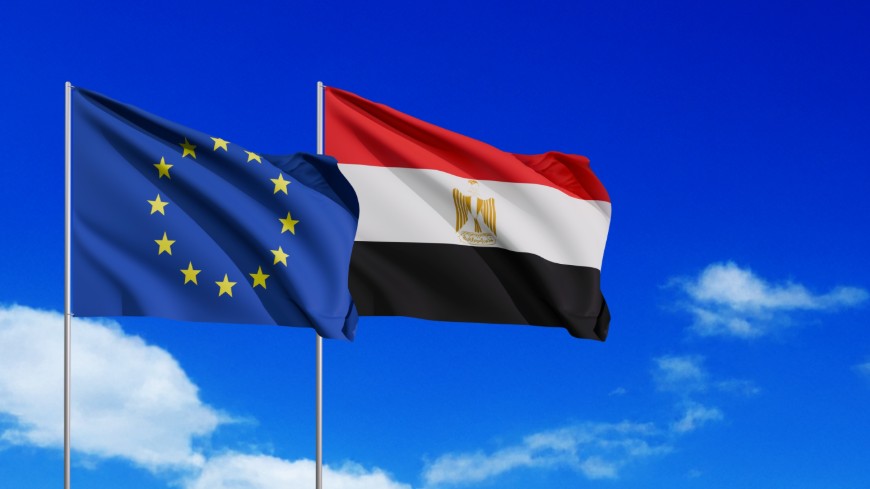
Egypt joins the EDQM’s OMCL Network as an associated member
This accession to the GEON strengthened international collaboration in medicines quality control, expanding global co-operation, knowledge‑sharing and the EDQM’s outreach beyond Europe.
The BIO INN Laboratories of the Egyptian Drug Authority (EDA) joined the GEON as an associated member. After Morocco, it became the second African OMCL in the network. Membership stood at 69 laboratories from 43 countries after this addition.
The EDA’s accession marked an important milestone in strengthening international collaboration in medicines quality control. As a GEON associated member, the OMCL’s biological units will benefit from shared expertise, training opportunities and access to collaborative studies, while also contributing to the network’s mission of ensuring the quality of medicines available on the market. Extending membership to the EDA also reinforces the EDQM’s commitment to fostering international co-operation and harmonisation in medicines quality control, in Europe and beyond.
More broadly, growing the network complements the EDQM’s efforts to expand its international outreach and collectively tackle global health issues more effectively.
![]()
EDQM On Air – The OMCL Network – A story of collaboration for safe and good quality medicines
OCCL Network – Croatian Institute of Public Health hosts 16th meeting
The 16th OCCL Network meeting reinforced European collaboration through co-ordinated market surveillance, data exchange and joint testing efforts to ensure cosmetic product quality and safety.
The 16th meeting of the European Network of OCCLs took place in Zagreb (Croatia) and online on 7 and 8 October 2025. Hosted by the Croatian Institute of Public Health (HZJZ) and co-ordinated by the EDQM, the hybrid meeting brought together 45 participants from national authorities in 27 countries. The HZJZ has been an active member since the creation of the network in 2010.
Throughout discussions, participants raised the importance of collaboration between OCCLs across Europe in monitoring cosmetic products and ensuring their quality and safety. Participants explored concrete ways to reduce the risk posed by unsafe cosmetic products through co-operation – particularly through the exchange of data and technical expertise and by organising co-ordinated, pan-European market surveillance studies.
The presentation of a co-ordinated test study on two potential contaminants associated with ultraviolet (UV) filters in certain sunscreen formulations served to demonstrate the value of effective co-ordination and collaboration. Additional topics included concerns regarding the quality of certain nail varnishes and the presence of microplastics in cosmetics.
Participants attending in person were treated to a guided tour of the HZJZ’s testing laboratories, showcasing state-of-the-art facilities and providing an opportunity to meet and speak with laboratory staff.