
Tackling public health challenges
Responding to evolving public health challenges requires agility, scientific rigour and close engagement with stakeholders. Throughout 2025, the European Directorate for the Quality of Medicines & HealthCare (EDQM) advanced work across its core domains to address emerging needs and support the safety, quality and accessibility of medicines and health products. This section highlights key achievements related to the European Pharmacopoeia (Ph. Eur.), initiatives addressing medicine shortages and activities in the field of substances of human origin (SoHO).
As science and technology advance at an unprecedented pace, standards must remain relevant and future‑proof. The Ph. Eur. continues to modernise its texts, integrating animal-free testing alternatives, state‑of‑the‑art analytical methods and new requirements for innovative products, such as messenger ribonucleic acid (mRNA) vaccines, advanced therapies and complex biologicals. This ongoing work strengthens harmonised quality standards, reinforces trust in medicines and supports healthcare systems in delivering safe and effective treatments.
In 2025, medicine shortages remained a significant concern for many countries. Drawing on expertise across its programmes, the EDQM contributed to initiatives to improve supply resilience by enhancing transparency and strengthening co-ordination between authorities, laboratories and manufacturers. This collaborative work is increasingly vital to anticipate disruptions, tackle shortages proactively and ensure that patients continue to receive the treatments they need.
In parallel, activities related to SoHO – blood, tissues, cells and organs – continued to reinforce safety and quality frameworks for therapies that rely on these substances. Through standard‑setting, guidance and expert collaboration, the EDQM helped national authorities to anticipate risks and support safe clinical use in a rapidly changing landscape.
Together, these initiatives reflect the EDQM’s commitment to anticipating developments, mobilising expert networks and delivering solutions that protect public health throughout Europe and beyond.
The European Pharmacopoeia – Advancements throughout the year
The Ph. Eur. is the cornerstone for the quality control of medicines in the 39 member states that have ratified the Convention on the Elaboration of a European Pharmacopoeia. By setting harmonised quality standards, the Ph. Eur. plays a vital role in protecting public health, providing a legal and scientific framework for the quality control of medicines and their components – from development through to production and marketing. These standards are legally binding for all manufacturers seeking to market their products in the Ph. Eur. member states. As global medicine production evolves, the Ph. Eur. has gained recognition far beyond Europe. Its standards help shape international quality benchmarks for medicines and support worldwide efforts to align and harmonise quality requirements, thus promoting the safe and effective use of medicinal products globally.
Swan song for general animal safety tests: another significant milestone in the elimination of animal tests from the Ph. Eur.
The European Pharmacopoeia Commission (EPC) decided to remove several long-standing safety tests requiring animals (for pyrogens, histamine and depressor substances), marking the end of general animal safety testing in the Ph. Eur. as of 1 January 2026.
At its 180th session in November 2024, the EPC decided to suppress the general chapters on Pyrogens (2.6.8), Histamine (2.6.10) and Depressor substances (2.6.11) – all of which required the use of animals – starting with the 12th Edition of the Ph. Eur. Fourteen monographs were also scheduled for revision to delete references to the histamine chapter or requirements associated with depressor substances.
These tests had been part of the Ph. Eur. since its first edition (1969) and were used to ensure the safety of parenteral medicines before the advent of modern analytical techniques and good manufacturing practice. Their removal aligns with the European Convention for the Protection of Vertebrate Animals Used for Experimental and other Scientific Purposes, and represents a major step in the EPC’s long‑standing work to implement the 3R principles (to replace, reduce and refine the use of animals in scientific procedures). Together with the suppression of the Ph. Eur. general chapter on Abnormal toxicity (2.6.9) in 2017, this decision marks the end of general animal safety testing in the Ph. Eur., effective 1 January 2026.
The suppression of Pyrogens (2.6.8) follows the adoption of 57 revised texts from which the rabbit pyrogen test had been deleted and the introduction of a new general chapter, Pyrogenicity (5.1.13) in the Ph. Eur. For Histamine (2.6.10) and Depressor substances (2.6.11), which involved guinea pigs and cats respectively, a detailed strategy for their deletion was agreed at the 177th EPC session in 2023. Further background on this approach is provided in the strategy document “Ph. Eur. testing for histamine and depressor substances using guinea-pigs and cats: the end of an era”, published in Pharmeuropa Bio & Scientific Notes in March 2024.

![]()
EDQM On Air – A win for animals – Phasing out the rabbit pyrogen test

A major step towards animal-free testing for the test for bacterial endotoxins
The Ph. Eur. has added a new animal‑free recombinant factor C testing method for bacterial endotoxins, offering a sustainable alternative to horseshoe crab‑derived reagents and enabling a shift to reliable, non‑animal methods from 2026 onwards.
The inclusion of the recombinant factor C (rFC) method in the Ph. Eur. and suppression of the general chapter Pyrogens (2.6.8) represent significant advances in animal‑free pyrogen testing and reflect the EDQM’s clear commitment to protecting animal welfare while ensuring the highest standards of patient safety and scientific rigour.
Effective 1 January 2026, the rabbit pyrogen test no longer appears in Ph. Eur. texts, with pyrogen testing instead relying on modern, animal-free, science-driven approaches.
The rFC method, included in Ph. Eur. Issue 13.1 as one of the approved techniques for bacterial endotoxin testing, provides an animal‑free alternative that reduces reliance on natural resources such as the horseshoe crab. Users retain a choice of methods, guided by risk assessment and suitability under new general chapter 5.1.13 Pyrogenicity. The EPC is also monitoring progress on emerging recombinant cascade reagents, which may be considered in future revisions as an alternative method.
![]()
EDQM On Air – A win for animals – Phasing out the rabbit pyrogen test
Publication of three new Ph. Eur. general chapters on plastic materials for containers
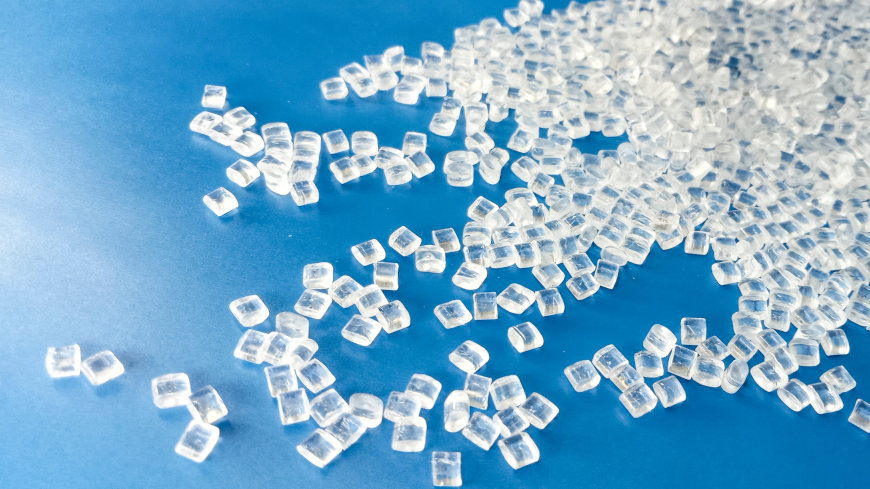
Three new general chapters on plastic materials used in pharmaceutical containers were published to provide clearer, more detailed quality requirements and enable safer and more consistent packaging practices.
Adopted at the EPC’s 180th session, these chapters expand the Ph. Eur.’s coverage of plastic materials used for pharmaceutical containers. Cyclo‑olefin polymers (3.1.16), Cyclo‑olefin copolymers (3.1.17) and Styrene block copolymers for containers and closures for parenteral preparations and ophthalmic preparations (3.1.18) will help standardise analytical procedures and specifications for these widely employed substances.
These are the first new texts in section 3.1. Materials used for the manufacture of containers since 2001 and the first in this section to reference the general chapter on Extractable elements in plastic materials for pharmaceutical use (2.4.35). They were published in Issue 12.1 of the Ph. Eur. in July 2025, with implementation on 1 January 2026.
Modernising excipient monographs: revised identification techniques and new CRSs
The Ph. Eur. revised several excipient monographs and added new reference standards to support advanced testing.
Several revised excipient monographs and new reference standards were added to the Ph. Eur. in 2024/2025 to promote modern infrared (IR) identification techniques and replace reference spectra with chemical reference substances. These revisions were published in Ph. Eur. Supplement 11.6 and implemented on 1 January 2025.
Updates included IR identification methods for various polysorbates, all of which now describe an IR identification by chemical reference substances (CRSs), and propylene glycol, which describes a new IR identification using Propylene glycol for identification CRS instead of the previous mix of chemical and physical tests. Additional monographs, such as Carnauba wax (0597), Beeswax, white (0069) and Beeswax, yellow (0070), were also modernised.
EPC adopts groundbreaking chapter on cell-based preparations for human use
A new chapter established standards for cell‑based medicinal products, addressing safety, quality and consistency in this fast‑growing field.
The EPC adopted a new general chapter, Cell‑based preparations for human use (5.32), at its 181st session in March 2025, crowning several years of work by the Cell Therapy Products Working Party. The text was published in Issue 12.2 of the Ph. Eur. in October 2025 and entered into force on 1 April 2026.
The chapter provides a comprehensive but flexible framework for the production and quality control of cell‑based preparations, complemented by four detailed sections outlining specific requirements for human haematopoietic stem cells, human chondrocytes, human limbal stem cells and human mesenchymal stromal cells. Its adoption follows earlier work on gene therapy medicinal products and formed part of the EPC’s priorities for 2023-2025.
First three general texts on mRNA vaccines published
Three foundational texts addressing mRNA vaccines set the first harmonised quality standards for this emerging platform, supporting innovation in vaccine development.
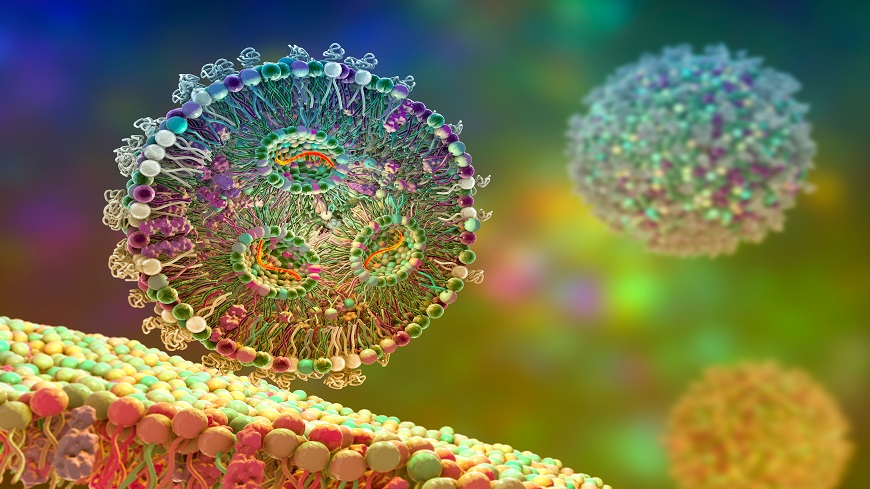
The EPC adopted three foundational general texts on messenger ribonucleic acid (mRNA) vaccines and their components at its 180th session in November 2024. Covering mRNA‑lipid nanoparticle (LNP) medicinal products, mRNA active substances and linear deoxyribonucleic acid (DNA) templates, these texts support innovation by establishing harmonised quality requirements for this rapidly evolving field.
The texts were drafted through the collaborative work of the mRNAVAC Working Party, bringing together experts from industry, academia, regulatory agencies and national control laboratories. They incorporate practical experience gained during and after the COVID‑19 pandemic and provide a production and control framework for developers and regulators. The texts were published in Ph. Eur. Issue 12.1 (July 2025).
![]()
EDQM On Air – The evolution of biologicals in the European Pharmacopoeia

EPC adopts cutting-edge HTS chapter to enhance viral contaminant detection in biological products
The EPC adopted a new high‑throughput sequencing (HTS) chapter to improve the detection of viral contaminants in biological products, thereby supporting patient safety, modernising the Ph. Eur. and replacing animal-based tests wherever possible.
The EPC adopted a new general chapter, High‑throughput sequencing for the detection of viral extraneous agents (2.6.41.), at its 181st session in March 2025. The text was published in Issue 12.2 of the Ph. Eur. in October 2025 and entered into force on 1 April 2026.
Known as next-generation sequencing, HTS is a state-of-the-art molecular biology technology that offers a broad approach to detecting known and unknown viral contaminants in biological products, including vaccines, recombinant proteins, viral vectors used for gene therapy and cell-based preparations for cell therapy. The technology enables better detection of viral extraneous agents and may contribute to improving animal welfare by replacing certain in vivo tests.
This chapter is intended to support users in implementing the new technology. It outlines the HTS workflow, the design of the method (non-targeted and targeted HTS), analytical approaches (genomics, viromics and transcriptomics) and the controls used in the routine test. It also provides guidelines for HTS method validation, including recommendations for selecting spiking materials and the evaluation of the relevant performance characteristics for HTS, as well as product-specific validation.
As a top priority for 2023-2025, the adoption of this general chapter demonstrates the EPC’s unwavering commitment to further modernising the Ph. Eur. and replacing in vivo tests wherever possible.
EPC adopts mycoplasmas general chapter and monographs, updated to incorporate latest analytical developments
Updated standards incorporating the latest analytical technologies ensure more sensitive and reliable detection of mycoplasmas.
During its 181st session in March 2025, the EPC adopted the general chapter on Mycoplasmas (2.6.7) and 11 related monographs, all of which had been revised to reflect a new, less prescriptive, risk-based testing strategy. The texts were published in Ph. Eur. Issue 12.2 in October 2025 and entered into force on 1 April 2026.
The revised general chapter specifies that both the culture method and the indicator cell culture method (or, alternatively, a nucleic amplification technique) should be used conjointly to ensure the detection of both “cultivable” and “non-cultivable” mycoplasmas, unless a monograph states otherwise or unless justified by a risk assessment and authorised by the competent authority. It also clarifies that samples should contain both cells and supernatant whenever possible. Furthermore, users may select suitable strains from the proposed list, with the possibility of including additional strains based on a risk assessment that considers product type and manufacturing process.
As a result of the changes made to general chapter 2.6.7, 11 monographs were revised to remove specific instructions on the method to be applied or the volume to be used for testing. Two individual monographs on vaccines for human use (Smallpox vaccine (live) (0164) and Yellow fever vaccine (0537)) now indicate that the test is carried out on the single harvest. With the agreement of the competent authority, the test may alternatively be carried out on the pooled harvests.
European Pharmacopoeia publishes first individual monoclonal antibody medicinal product monograph
The Ph. Eur.’s first monograph for an individual monoclonal antibody (Golimumab injection) was published, offering a precedent‑setting, detailed specification for a complex biological medicine.
The Ph. Eur. published its first monograph for a monoclonal antibody (mAb) medicinal product, Golimumab injection (3187), an IgG1-antibody based TNF-alpha antagonist. The new monograph was published in Ph. Eur. Issue 12.2 in October 2025 and entered into force on 1 April 2026.
This monograph joined Infliximab concentrated solution (2928), as well as the general chapters on Cell-based assays for potency determination of TNF-alpha antagonists (2.7.26) and Capillary isoelectric focusing for recombinant therapeutic monoclonal antibodies (2.5.44), all three of which were elaborated as part of the mAb pilot phase. An additional monograph, Golimumab concentrated solution (3103), for another anti-TNF-alpha mAb was developed in parallel but using a single-source approach. Individual monographs on a TNF-alpha antagonist (adalimumab) and on a mAb that targets a different type of cytokines, i.e. interleukins (ustekinumab), as well as a general chapter on Size-exclusion chromatography for recombinant therapeutic monoclonal antibodies (2.5.43), are also in the pipeline.
As the first individual medicinal product monograph covering a monoclonal antibody, Golimumab injection (3187) constitutes another milestone in the EPC’s commitment to developing public standards for this class of biotherapeutics.
Ph. Eur. publication schedule evolves to better meet users’ needs
The Ph. Eur. publication model is now better suited to users’ professional requirements, ensuring access to standards as soon as they are ready.
As part of its transition to an online-only Ph. Eur. from the 12th Edition (July 2025), the EDQM announced a major revision of the Ph. Eur. publication schedule. Under the new model – starting with Issue 13.1. – the six-month period between publication and implementation dates has been extended to nine months. This move was made to give users more time to prepare for future modifications and implementation of standards.
Ph. Eur. Issue 13.1 was published in April 2026, with an implementation date of January 2027 for its new and revised texts. The publication schedule for current and upcoming issues of the Ph. Eur. is available on the EDQM website and the new Ph. Eur. platform.