
Tackling public health challenges
EDQM initiatives on medicine shortages
Medicine shortages continue to place a strain on healthcare systems across Europe, affecting patient care and driving up costs. Although not a new challenge, the problem has intensified in recent years due to the COVID‑19 pandemic and geopolitical instability, exposing weaknesses across the pharmaceutical supply chain and underscoring the need for stronger co‑ordinated responses.
Hospital and community pharmacists are at the forefront of efforts to mitigate the impact of these shortages, notably by preparing extemporaneous and stock preparations when authorised products are unavailable. In this context, the European Committee on Pharmaceuticals and Pharmaceutical Care (CD-P-PH) and the EPC have initiated two complementary projects, aligned with other international efforts, to help ensure the continued availability of safe pharmaceutical preparations of appropriate quality.
EDQM tackles medicine shortages

The EDQM is leading three complementary initiatives to help authorities and pharmacists anticipate, manage and mitigate medicine shortages with safe, quality‑assured alternatives.
The Methodological guide to select medicines at risk of shortages aims to equip national competent authorities and hospital and community pharmacists with a structured approach for identifying medicines that could become scarce during public health emergencies. Once finalised, the guide will support strategic planning by helping determine which products can be safely prepared in pharmacies when industrially manufactured medicines are unavailable.
To provide practical tools during active shortages, the EDQM has also set up the European Drug Shortages Formulary (EDSForm). Its monographs offer standardised methods for preparing and controlling unlicensed pharmaceutical preparations that can temporarily replace essential medicines. This long-term, proactive resource is complemented by technical recommendations from the EDSForm Working Party (EDSForm WP), providing short-term, reactive guidance for preparing extemporaneous or stock formulations when no EDSForm monograph exists.
When a shortage is caused by limited availability of an active pharmaceutical ingredient (API), the EDQM aims to support stakeholders by considering requests for fast-track assessment of CEP applications and revisions. Eligibility requirements are described in the associated EDQM guideline “Guidance on requesting fast-track assessment of CEP applications, revisions and renewals”.
Together, these initiatives strengthen Europe’s capacity to prevent, plan for and alleviate the impact of medicine shortages.
European Drug Shortages Formulary takes shape: EDQM publishes first EDSForm texts for public consultation

The EDQM announced the opening for public consultation of the first three texts of the European Drug Shortages Formulary, its second formulary after PaedForm.
The EDQM released the first three texts for consultation in the European Drug Shortages Formulary (EDSForm), inviting healthcare professionals and interested parties across Europe to provide feedback on two general texts intended to help users navigate the content and concepts laid down in the formulary – Introduction to the European Drug Shortages Formulary and General principles of the European Drug Shortages Formulary – and on the draft Amoxicillin capsules monograph. These first texts were finalised only a few months after their addition to EDSForm WP’s work programme in November 2024. The commenting deadline was 31 December 2025, and were published in April 2026 on the same platform.
Technical recommendation of the EDSForm WP: sulfamethoxazole-trimethoprim, paediatric products

Recurring shortages of paediatric co‑trimoxazole prompted the EDSForm WP to issue technical recommendations, outlining available unlicensed oral formulations to support healthcare professionals during temporary disruptions.
Sulfamethoxazole-trimethoprim (also known as co-trimoxazole) is a fixed-dose combination of two antibiotics used to treat a number of bacterial infections, which several member states had reported recurring difficulties in procuring. Paediatric forms were especially affected, prompting the EDSForm WP to compile existing knowledge on extemporaneous or stock oral formulations of sulfamethoxazole-trimethoprim used to alleviate the lack of age-appropriate licensed products.
The information provided in the resulting technical recommendation was published to help healthcare professionals in their risk-assessment and decision-making processes on how to best treat their paediatric patients when faced with the temporary unavailability of a suitable formulation of this product. The recommendation addressed general considerations on unlicensed pharmaceutical preparations containing sulfamethoxazole-trimethoprim and included nine oral suspensions, one of which, shared directly with the EDSForm WP, could be suitable for large-batch preparations and was backed by relevant stability data.
Technical recommendation of the EDSForm WP: clarithromycin, paediatric products

Major shortages of paediatric clarithromycin led the EDQM and the EDSForm WP to compile limited existing data into technical recommendations, including three unlicensed formulations to support healthcare professionals during supply disruptions.
Clarithromycin is a macrolide antibiotic widely used to treat a number of infections. With major shortages of clarithromycin-containing products – especially paediatric forms (e.g. granules for oral suspension) – being reported in several member states, the EDSForm WP conducted a bibliographical review. It highlighted the relative scarcity of existing knowledge on extemporaneous or stock oral formulations of clarithromycin used to alleviate the lack of age-appropriate licensed products containing clarithromycin.
The experts of the EDSForm WP compiled the available information in a technical recommendation intended to help healthcare professionals in their risk-assessment and decision-making processes. It contains technical considerations on the production of unlicensed pharmaceutical preparations containing clarithromycin, as well as three formulations, one of which was shared by the French National Agency for Medicines and Health Products Safety (ANSM). In view of the existing data, they considered that additional development of an appropriate formulation for the production of extemporaneous or stock preparations might be necessary.
Regulatory reliance and fast-track assessment in the CEP procedure

The EDQM is strengthening regulatory efficiency through good reliance practices and introducing fast‑track Certificate of Suitability (CEP) assessments to support timely access to critical substances and help mitigate the risks of medicine shortages.
Regulatory reliance, as defined by WHO, is rooted in good regulatory practices that strengthen the efficiency, consistency and effectiveness of medicines regulation. Many authorities are increasingly adopting reliance principles in their assessment processes. The EDQM applies this approach within the CEP procedure, particularly for new applications and sister files, to facilitate timely access to safe, effective and quality‑assured active substances while optimising regulatory resources.
To date, reliance-based assessments have focused primarily on applications where applicants have declared the use of an appropriate Active Substance Master File (ASMF) or Drug Master File (DMF). The EDQM is also exploring additional routes to expand reliance approaches and encourages applicants to include relevant, supportive information in their submissions.
Importantly, and in alignment with the EU Critical Medicines Act, the EDQM is introducing the possibility of fast‑track treatment for certain CEP applications or revisions. This measure is intended for justified cases where accelerated assessment could help prevent or mitigate shortages of pharmaceutical substances, thereby supporting continuity of supply for critical medicines. A dedicated mechanism is being put in place to allow applicants to request fast‑tracked treatment when needed.
EDQM Stakeholder Event - Plasma Supply Continuity
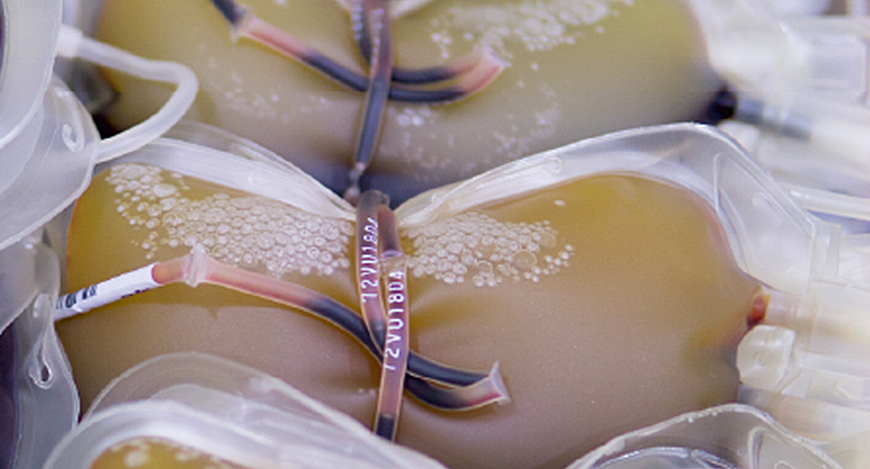
This stakeholder event highlighted strategies to increase the safe collection and adequate supply of plasma and plasma-derived medicinal products (PDMPs), building upon recent and ongoing initiatives in Europe.
This event provided an update on the latest developments in plasma supply in Europe, along with strategies to enhance and increase the safe collection and adequate supply of plasma and PDMPs.
It covered the entire plasma-to-PDMP-to-patient chain as part of a continuous effort to build upon recent and ongoing initiatives aimed at increasing and improving plasma collection and PDMP supply in European countries, and in the context of the changing regulatory landscape in the EU.
The EDQM, an essential partner for blood establishments in Europe and beyond, is a major contributor to developing internationally recognised guidelines and providing capacity-building tools. In collaboration with international experts, the EDQM actively supports progress in the field of SoHO by organising dedicated conferences and providing regular training courses on quality management.
Anti-D immunoglobulin: CD-P-TS targeted initiatives to strengthen European supply

Through sustained technical and policy actions since 2010, the CD‑P‑TS has helped address vulnerabilities in Europe’s anti‑D IgG supply, supporting resilient, sustainable plasma collection and shortage prevention.
Over the past decade, the CD‑P‑TS, co-ordinated by the EDQM, has led and supported a series of initiatives aimed at strengthening the resilience and sustainability of Europe’s anti‑D immunoglobulin (IgG) supply. These efforts have addressed long‑standing structural weaknesses, notably Europe’s near‑total reliance on anti‑D plasma collected in the United States and the associated risks of supply disruption and shortages.
The CD‑P‑TS first examined this issue in 2010 through a position paper on the development of monoclonal anti‑D antibodies, followed in 2014 by a comprehensive report on anti‑D alloimmunisation, immunoprophylaxis practices and European self‑sufficiency. Building on this foundation, a dedicated working group on anti‑D IgG was established in 2023 to raise awareness of the lack of anti‑D plasma collection in Europe and to identify actions needed to improve supply sufficiency.
The working group promoted international co-operation on plasma collection, explored donor immunisation strategies, examined manufacturing and access challenges for polyclonal anti‑D IgG, and assessed the potential of alternative or complementary therapies. As part of this work, the EDQM hosted a webinar series in autumn 2023, which helped mobilise stakeholders and laid the groundwork for co-ordinated international action.
In October 2024, a joint CD‑P‑TS–European Blood Alliance survey gathered data on the feasibility of initiating or resuming anti‑D plasma collection across Europe. In parallel, recommendations issued in 2025 by the EMA and the Heads of Medicines Agencies highlighted persistent vulnerabilities in the anti‑D IgG supply chain.
The resulting technical report, drafted in 2025, consolidated these initiatives, complemented regulatory recommendations and provided scientific, technical and operational guidance to support sustainable European anti‑D plasma collection programmes, strengthening supply continuity and reducing the risk of shortages.
Find out more on the dedicated EDQM web page: Anti-D immunoglobulin: CD-P-TS targeted initiatives to strengthen European supply.